Crypto vs Stocks: Which is Better for Beginners in 2026?
Crypto Stocks Beginner Investing 2026 Guide
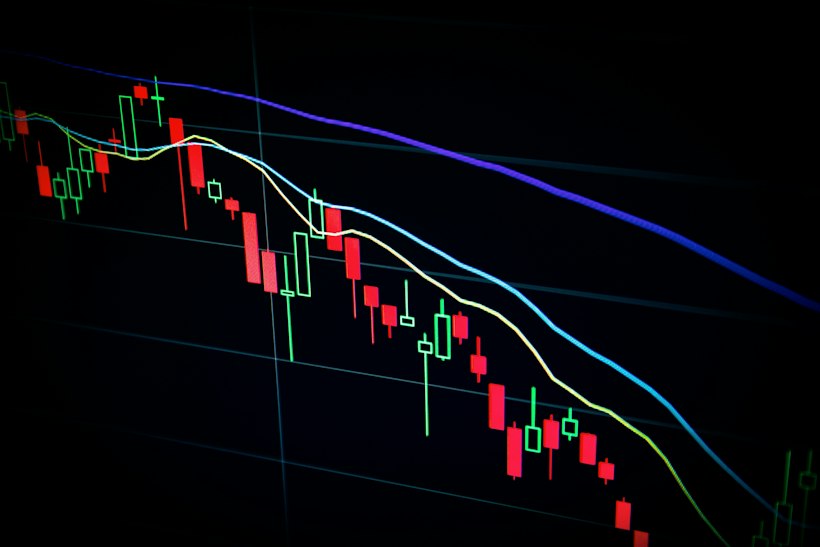
Crypto or stocks? In 2026, the answer is more nuanced — and more important — than ever.
Let's cut to the chase. You've got some money you want to invest, and you keep hearing two things: stocks are "safe and boring," and crypto is "where the real money is." You're not sure who to believe, and honestly, that confusion is completely valid — because both sides are partly right.
This isn't one of those articles that's going to spend 3,000 words avoiding an answer. By the time you finish reading this, you'll know exactly where to put your first dollar based on your situation, your risk tolerance, and what you're actually trying to achieve. Let's get into it.
First, What Are You Actually Comparing?
Before we pit these two against each other, it helps to understand what they really are — because they're not as similar as social media makes them sound.
Stocks are ownership stakes in real companies. When you buy a share of Apple or Tesla, you own a tiny piece of that company — its assets, its earnings, and its future. Companies are regulated by bodies like the SEC, trade on established exchanges with set hours, and in many cases pay dividends. There's a reason stocks have been the backbone of wealth-building for over a century.
Crypto is a completely different animal. When you buy Bitcoin or Ethereum, you're not buying a stake in a company. You're buying a digital asset whose value is driven by supply and demand, network utility, and — a lot of the time — pure market sentiment. It trades 24/7, has no central authority, and comes with a risk profile that makes even the most aggressive growth stocks look tame by comparison.
Both can make you money. Both can lose you money. The question is which one makes sense for you, right now.
The Numbers: Returns, Risk, and Volatility Side by Side
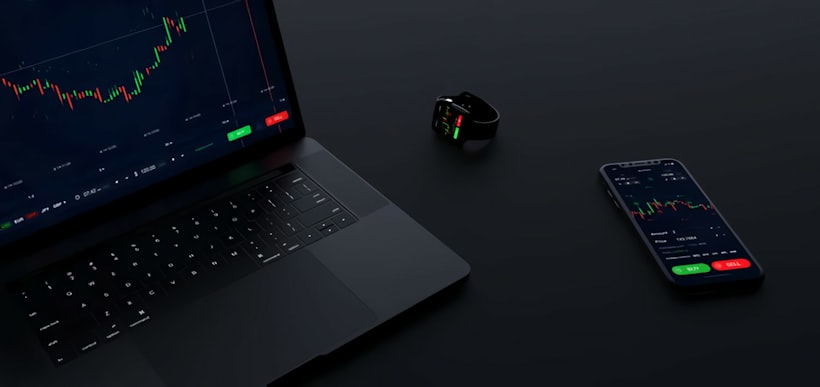
The data shows crypto's wild upside — but also its brutal drawdowns that beginners often don't survive.
Here's the honest picture from the last five years of data:
| Factor | 📈 Stocks (S&P 500) | ₿ Crypto (Bitcoin) |
|---|---|---|
| Avg. Annual Return | ~10% (100-year average) | Much higher in bull cycles, but wildly inconsistent |
| Annual Volatility | ~15–25% | ~38–80%+ (even at 2026 lows) |
| Worst Drawdown | ~-19% (2022 bear market) | 80%+ drawdowns across multiple cycles |
| Trading Hours | 9:30 AM – 4 PM (weekdays) | 24/7, 365 days a year |
| Regulation | Strong (SEC, FINRA) | Evolving — still inconsistent globally |
| Dividends / Income | Yes — many stocks pay dividends | No dividends; some staking yields (2–4%) |
| Entry Barrier | Low (ETFs from $1) | Very low (buy fractions of any coin) |
| Best For | Long-term wealth building | High-risk, high-reward exposure |
The raw return data over the last decade makes crypto look like a no-brainer. A $10,000 investment in Bitcoin five years ago would be worth roughly $46,200 today, compared to about $23,500 in the Nasdaq 100. But those numbers hide something crucial: to capture those returns, you had to sit through multiple 50–80% price crashes without panic-selling. Most beginners can't do that — and that's not a character flaw, it's just human psychology.
The Case for Stocks (Especially for Beginners)
If you're new to investing, stocks offer something crypto simply can't: structure. When you put money into a broad index fund like one tracking the S&P 500, you're instantly diversified across 500 of America's largest companies. You're not betting on one thing — you're betting on the entire economy doing reasonably well over time. And historically, it does.
Here's why stocks tend to win for beginners:
- Easier to understand. A company makes money, grows, pays dividends — that logic is accessible. Crypto's value drivers (tokenomics, network effects, staking yields) require a much steeper learning curve.
- Regulation protects you. Stocks are backed by decades of legal infrastructure. If a brokerage fails, your assets are typically insured. In crypto, if an exchange collapses — like several did in 2022 and beyond — your money can disappear entirely.
- Tax reporting is simpler. Your broker handles most of your tax paperwork. Crypto tax reporting, on the other hand, can become a nightmare — especially if you're trading frequently or across multiple wallets and exchanges.
- You can go fully passive. Buy an index fund, set up automatic contributions, and forget about it for 20 years. That strategy has made ordinary people wealthy. There's no crypto equivalent that's anywhere near as simple or proven.
- Lower emotional stress. Stock market dips of 10–15% are uncomfortable. Crypto dips of 40% in a week are reality. For someone just starting out, the emotional weight of massive swings can lead to bad decisions at exactly the wrong moment.
The Case for Crypto (It's Not All Hype)
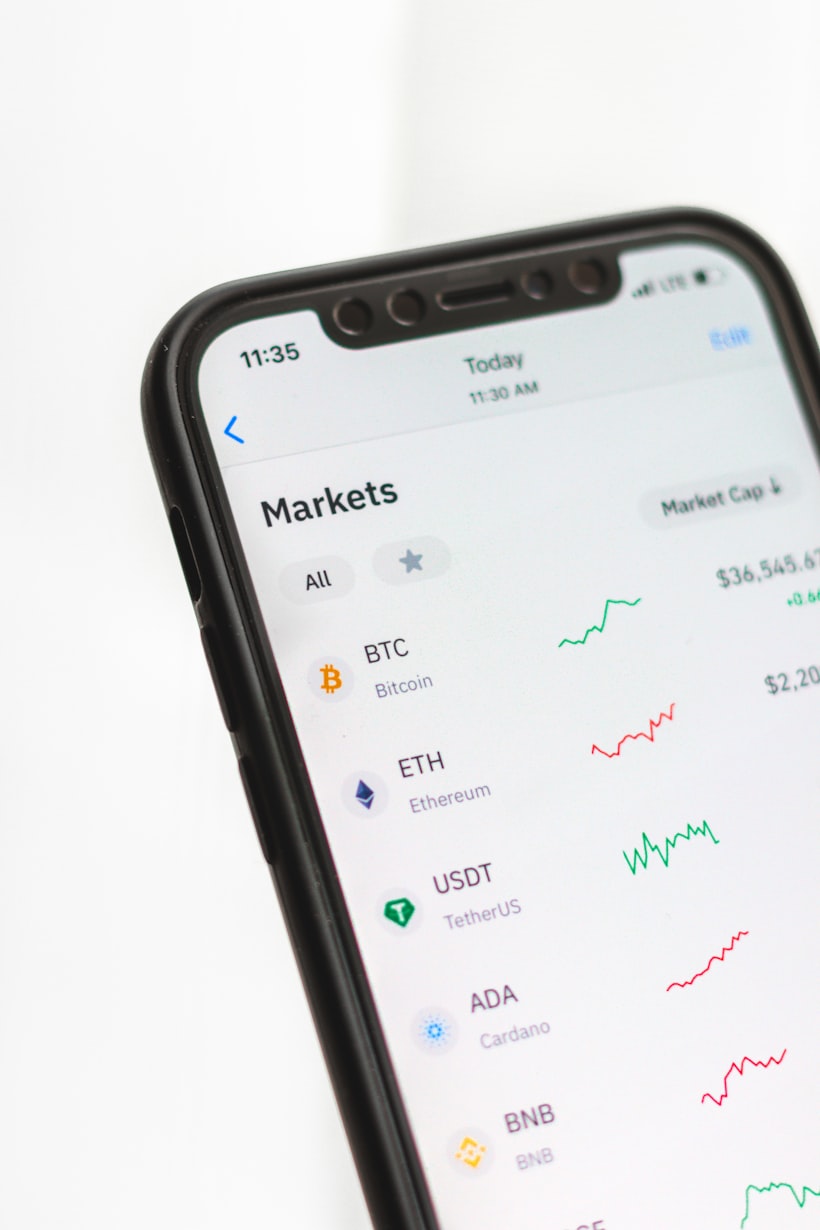
Crypto isn't just speculation anymore — institutional adoption and Bitcoin ETFs have changed the game significantly.
Dismissing crypto entirely in 2026 would be as shortsighted as dismissing the internet in 2000. Yes, there's still a massive amount of noise and speculation — but underneath that, the infrastructure has matured significantly.
Here's what makes crypto genuinely interesting for some beginners:
- Accessibility is unmatched. You can create a Coinbase or Binance account in minutes, buy $10 worth of Bitcoin, and you're invested. No broker verification wait times, no minimum account balances, no market hours to worry about.
- The upside is real — if you can handle the ride. Crypto has outperformed traditional equities significantly in bull markets. The 2020–2021 cycle made early believers life-changing returns that no stock market index came close to matching.
- Bitcoin ETFs changed the game. Since the approval of spot Bitcoin ETFs from major players like BlackRock (IBIT) and Fidelity (FBTC), beginners can now get Bitcoin exposure directly through a regular brokerage account — no wallets, no seed phrases, no custody risk. This closed a huge gap.
- It trades 24/7. Night owl? Investing after work? Crypto doesn't care what time it is. That flexibility genuinely appeals to people who can't monitor markets during business hours.
- Small amounts go further. You can buy 0.0001 Bitcoin. There's no minimum lot size. That makes it genuinely accessible for people starting with small amounts.
If you want to go deeper on the crypto side specifically, our post on How to Automate Your Crypto Portfolio: Top 2026 Tools covers the best platforms and strategies for managing digital assets without staring at charts all day.
What's Actually Changed in 2026?
This isn't 2018, where crypto was purely a Wild West of speculative bets. The landscape has shifted meaningfully, and beginners in 2026 are entering a different market than their predecessors.
A few things worth knowing:
Institutional Money Has Arrived
Over 4,500 institutional entities now hold spot Bitcoin ETFs as of early 2026. When BlackRock and Fidelity are selling Bitcoin products to pension funds and retirement accounts, "it's just internet money" doesn't hold up as a criticism anymore. This institutional adoption has brought more stability — Bitcoin's annualized volatility dropped to around 38% in early 2026, its lowest level in over a decade, compared to the 80%+ swings of earlier cycles.
Stocks Are Volatile Too — More Than They Used to Be
The AI-driven rally in tech stocks has given certain equities a volatility profile that starts to resemble mid-cap crypto. Nvidia's moves in recent years have been dramatic enough that the traditional "stocks are stable, crypto is wild" narrative has become more complicated. The S&P 500 itself hit all-time highs in 2026 amid genuine uncertainty about interest rates and global trade conditions.
Crypto and Stocks Are Moving Together More
One of the original arguments for crypto was that it was uncorrelated to traditional markets — a true hedge. That's less true now. Bitcoin's correlation with the Nasdaq has risen significantly since institutional adoption accelerated, meaning during market-wide sell-offs, both tend to fall together. This doesn't make crypto bad — it just means the diversification argument is weaker than it once was.
The Beginner's Framework: How to Actually Decide
Here's a practical way to think through this for your own situation. Ask yourself these questions honestly:
1. How would you react to a 40% drop in your investment value?
If the answer is "I'd panic and sell immediately," then crypto will likely cost you money. Price crashes in crypto aren't rare events — they're expected parts of every cycle. If you can't emotionally tolerate holding through a crash, you'll sell at the worst time and lock in losses.
2. What's your time horizon?
Investments needed within the next five years should stay in conservative options. Medium-term goals (5–15 years) suit a diversified stock portfolio. Only money you genuinely don't need for 15 years or more can comfortably absorb crypto's wild swings.
3. Are you investing money you can afford to lose?
This is the most important question. Never put rent money, emergency funds, or essential savings into either asset class — but especially not into crypto. The golden rule: invest only what you could lose entirely without it affecting your actual life.
4. How much time do you want to spend on this?
Stocks with a passive index fund approach require almost zero time. Crypto, done well, requires attention. New projects, security updates, portfolio rebalancing, tax tracking — it's more active than most people expect going in.
Where to Actually Start — Platforms That Work
If you've decided to start with stocks, platforms like Fidelity, Charles Schwab, and Vanguard are well-established, low-cost, and beginner-friendly. A simple S&P 500 index fund or total market ETF is the classic starting point recommended by virtually every credible financial educator.
For crypto, Coinbase is the most beginner-friendly exchange in most countries — clear interface, strong security, and it's regulated in the US. Binance offers more coins and lower fees but has a steeper learning curve. If you want Bitcoin exposure without the hassle of managing wallets and keys, the Bitcoin ETFs (IBIT from BlackRock or FBTC from Fidelity) let you buy through your existing brokerage account.
And if you're interested in automating your trades on either side, our piece on How to Build Your First Automated Trading Strategy (No Code Required) walks through tools that work across both stocks and crypto — worth reading once you're ready to go beyond manual buying.
The Verdict: Which Should a Beginner Choose in 2026?

The smart move isn't choosing one forever — it's building a foundation first, then expanding.
Here's the honest answer, broken into three types of beginners:
The bottom line is this: crypto isn't going away, and stocks aren't going out of style. The investors who are doing best in 2026 aren't picking sides — they're using both tools for what they're actually good at. Stocks for the foundation, crypto for calculated upside bets.
Start where your risk tolerance actually is, not where you wish it was. Build the habit of investing consistently first. The asset you choose matters less than the consistency with which you invest over time.
Found This Helpful?
Drop your investing questions in the comments — crypto, stocks, or both. We post new trading and investing content every week at AddicTech.
Frequently Asked Questions
No — crypto remains significantly more volatile than the stock market, even with the maturation of the space. Bitcoin's annualized volatility in early 2026 was around 38%, compared to around 15–25% for the S&P 500. Stocks are the safer choice for most beginners.
Absolutely — and most financial educators suggest you should. A common beginner framework is 90% in diversified stock index funds and 10% or less in crypto. This balances stability with exposure to higher-growth digital assets.
Almost nothing, technically. Many brokerages allow you to buy fractional shares of index funds for as little as $1. Crypto exchanges let you buy fractions of Bitcoin for small amounts too. The practical advice is to start with whatever amount you can invest consistently every month — even $20–50 — rather than waiting until you have a large sum.
Bitcoin first, Ethereum second. Both have the longest track records, the deepest liquidity, and the most regulatory clarity. Avoid altcoins until you genuinely understand what you're buying — the vast majority of smaller coins have failed or faded significantly over time.
Yes — in most countries, crypto gains are taxable events, including every trade, not just withdrawals to your bank account. This is one area where stocks are much simpler; your broker handles most of the reporting for you. Keep track of every crypto transaction you make, or use a dedicated crypto tax tool from day one.
It's one of the best strategies for beginners in both markets. DCA means investing a fixed amount regularly regardless of price — $50 every week, for example. This removes the pressure of trying to time the market (which even professionals fail at consistently) and smooths out your average entry price over time.
Sources & Further Reading:
Coin Bureau — Crypto vs Stocks 2026 (Updated April 2026)
The Motley Fool — Crypto vs Stocks: What Should I Invest In?
KuCoin — 5 Years of Historical Volatility Data: Crypto vs Stocks
Coin Bureau — Cryptocurrency vs Stocks for Beginners

.jpg)

0 Comments